Ibn Muqla, a visionary calligrapher and statesman of the Abbasid era, is widely regarded as the father of the Six Scripts (al-Aqlam al-Sittah). He developed a proportional system based on the dot (nuqta) and the alif, revolutionizing the art of calligraphy and providing a clear and consistent framework for creating beautiful and harmonious scripts.
- Calligraphy
Famous Arabic Calligraphers
- Muhammad Zeeshan
- December 1, 2025
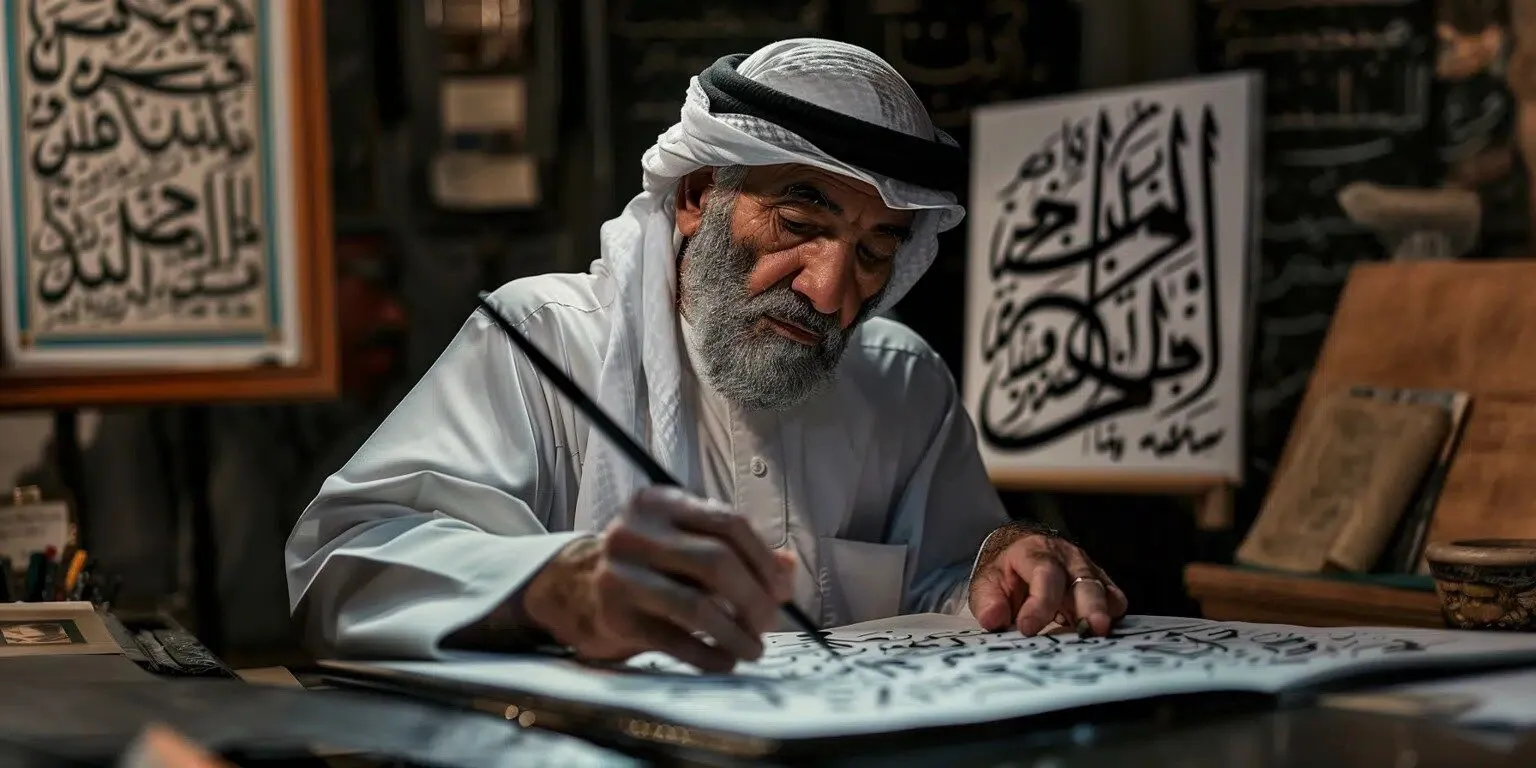
Famous Arabic calligraphers have been instrumental in preserving and advancing the art of Arabic calligraphy. These skilled artists have dedicated their lives to mastering and refining the techniques, styles, and principles of calligraphy, ensuring its survival and evolution through generations. Their creativity, innovation, and technical mastery have expanded the artistic possibilities of Arabic calligraphy, from the early masters who established the canonical scripts to contemporary calligraphers pushing the boundaries of the art form.
A Timeline of Famous Arabic Calligraphers
Ibn al-Bawwab, a master calligrapher of the late Abbasid period, is renowned for his refinement and perfection of Ibn Muqla’s proportional system. His famous Qur’an manuscript, known as the “Qur’an of Ibn al-Bawwab,” showcases his mastery of the Naskh script and set a new benchmark for Qur’anic calligraphy.
Sheikh Hamdullah, a renowned calligrapher and teacher during the Ottoman Empire, is widely credited with the development of the distinctive Ottoman calligraphic style. His innovations and influence on the standardization of calligraphic scripts made him a pivotal figure in the history of Ottoman calligraphy.
Seyyid Kasim Gubari, a master calligrapher of the early 17th century, is renowned for his unparalleled skill in miniature calligraphy. His innovative techniques, such as the use of colored inks and gold leaf, pushed the boundaries of traditional materials and techniques in calligraphy.
Hafiz Osman, a master calligrapher of the late 17th century, is celebrated for his unrivaled mastery of the Thuluth script. As a respected teacher and mentor, he played a crucial role in training future generations of Ottoman calligraphers and cementing the status of Arabic calligraphy as a highly venerated art form.
Mustafa Rakim, a prominent Ottoman calligrapher of the late 18th and early 19th centuries, played a crucial role in bridging the gap between classical and modern calligraphy. His works, characterized by elegance, clarity, and technical perfection, set a new standard for calligraphic excellence and served as a model for generations of calligraphers to come.
Mahmud Yazir, a Turkish calligrapher and scholar of the early 20th century, played a key role in modernizing Arabic calligraphy for the new era. His contributions to calligraphy education and the preservation of the art form, including the establishment of calligraphy schools and the publication of instructional materials, helped ensure the transmission of traditional skills and knowledge to new generations of calligraphers.
Hasan Celebi, a master calligrapher of the late 20th century, is renowned for his innovative approach to Arabic calligraphy that blended traditional techniques with contemporary design sensibilities. His international recognition and influence on modern calligraphers helped establish Arabic calligraphy as a vital and relevant art form in the contemporary world.
Mohamed Zakariya, an American calligrapher and scholar, is widely regarded as one of the foremost practitioners of classical Arabic calligraphy in the contemporary world. His mastery of classical forms and his role in promoting Arabic calligraphy in the Western world have made him a key figure in fostering appreciation for the art form in the contemporary global context.
Nourine Hammad, an Egyptian calligrapher and artist, is known for her innovative approach to Arabic calligraphy that fuses traditional techniques with the language of abstract art. Her experimental work challenges traditional notions of legibility and form, contributing to the modernization of Arabic calligraphy.
Samir Sayegh, a Lebanese calligrapher and graphic designer, is celebrated for his experimental approach to Arabic calligraphy that incorporates elements of graphic design, typography, and digital technology. His innovative work and influence on the contemporary calligraphic art scene have helped shape the future direction of Arabic calligraphy in the 21st century.
The Early Masters
The early Arabic calligraphers played a crucial role in establishing the foundations of the art form, codifying the rules, proportions, and styles that would shape its development for centuries to come. Among these pioneering calligraphers, two figures stand out for their immense contributions: Ibn Muqla and Ibn al-Bawwab.
